Consulting:
Aaron Hoffer joined The Alacer Group in Bellevue as a senior consultant and leader of the new Alacer Center for Advanced Computing.
Author Archives: Reid Wegley
Making Smart Grids Smarter
We’ve talked a lot about how big data is being used within industries such as banking and healthcare – but we’re equally fascinated to see how big data is collected and analyzed by other industries. Energy-related companies are creating and deploying big data based projects that are accomplishing everything from the creation of a more intuitive smart grid to helping homeowners be more energy efficient.
The energy sector’s data management issues are the same as those experienced by other industries. Utilities are looking for measurement and analytics systems that enable them to tap real-time information and to use it to take appropriate actions to avoid shortages. Here’s one example: 10 years ago, a real-time measurement system that could provide data from multiple points on the energy grid to avoid a blackout was a pipedream. That’s why, in 2003, the U.S. experienced a massive blackout affecting more than 50 million people in the Northeast and Midwest and even into Canada.
Fast forward to 2013. Today, we have phasor measurement units (PMUs) in place that measure electrical waves on a grid. PMUs are essential components of a smart grid monitoring system, and more than 150 are already installed and running. The first deployment was right in our area at the Bonneville Power Administration, which provides 35 percent of the power in the Pacific Northwest. It established a Wide Area Management System in 2000 to rapidly transfer and digest data collected from PMUs in real-time, enabling it to improve power flow over the grid and minimize power disruptions to consumers.
It’s easy to see how big data algorithms are helping utilities crunch the data from PMUs to learn from the smart grid; however, a massive amount of data is now becoming available to utility companies via homes with smart meters. In a survey conducted by Oracle:
- smart meters were delivering information on outages (78 percent), voltage usage (73 percent), tampering (63 percent) and diagnostics (56 percent).
- responding utility companies see a need to improve their ability to take this information and turn it into actionable intelligence; 64 percent of utilities said it was one of their top three priorities
On the downside, the survey also pinpointed that utilities are still struggling to deal with the mountain of information now at their fingertips; they only rate themselves as 6.7 on a scale of 10 in preparedness, and 50 percent say they have missed opportunities to deliver useful information to customers.
As progress is made in this area, generated data will play a crucial role in tightening smart grid operations. One day in the very near future, real-time data crunching will make the grid self-healing, needing far less hands-on maintenance, reducing disruptions due to weather and safeguarding resources for the future.
The Alacer Group is currently working on a project dealing with big data and energy systems. Watch for more information in the coming months.
by Ed Sarausad
Helping Healthcare Get Lean
On Saturday, Richard Paxton and I will be guest lecturers at the University of Washington – Bothell to talk about how process analytics can be better utilized in the healthcare setting, particularly when it comes to redesigning processes based on Lean principles.
We’ve talked and written on this topic in the past, most recently in Richard’s blog post. Hospitals and healthcare facilities typically have a lot of structured and unstructured data available that can be used to build a process flow model. The beauty of a model is that it allows operational changes to be tested, observed and fully optimized before they are actually instituted within the facility. This is an important benefit, since model testing minimizes the impact change has on patients and medical personnel.
We’ll be discussing this and other related tools, such as Value Stream Mapping IGrafx.
We’re also talking for the first time about a new project we’re initiating with UW School of Business grad students that involves using a mobile application to collect and validate data that impacts customer satisfaction within the healthcare setting.
The program is being held Saturday, October 12 at 10:00 a.m. at the North Creek Events Center, University of Washington – Bothell campus.
Ed Sarausad
Alacer’s Ed Sarausad to Discuss Technological Advances at the University of Washington-Bothell
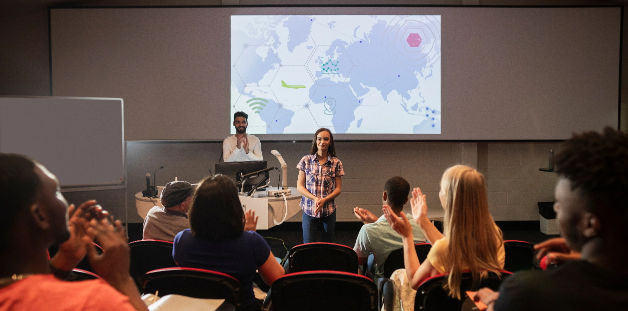
Sarausad to serve as a panel presenter discussing new and disruptive technologies
Bellevue, WA – October 3, 2013 – The Alacer Group, dedicated to helping business leaders accelerate performance, quality, productivity and profitability, today announced that senior managing partner and CTO Ed Sarausad will participate in a post-graduate level panel presentation discussing technological advances. “Leadership Meets Technology,” an exploration of new and disruptive technologies, is sponsored by the University of Washington Bothell’s MBA Association and will be held on the Bothell campus on Friday, October 11 at 5:30 p.m.
Moderated by professor Manuela Hoehn-Weiss, Sarausad is joined by panelists Aman Bhutani, senior vice president of technology at Expedia, and Travis Muhlestein, GPM for Microsoft’s XBox.
About The Alacer Group
Headquartered in Bellevue, WA, with offices in New York and Dallas, The Alacer Group is a business consulting firm focused on four practice areas: big data, technology, finance and healthcare. Offering expert consultants around the globe, Alacer works with companies to resolve their needs quickly and smartly, resulting in positive outcomes. For more information, please visit the website at www.alacergroup.com or find us on LinkedIn.
Media Contact: Rachel Berry/ VOXUS, Inc. 253-444-5441 rberry@voxuspr.com
Shhh…ACAC is Coming
It’s still under wraps…but we wanted to let you know that we’re putting the final touches on a new corporate initiative: the Alacer Center for Advanced Computing (ACAC).
The term “advanced computing” has many definitions, ranging from supercomputing to quantum analytics. For us, ACAC has three purposes: share, learn and accelerate. It will serve as a showcase for a technology platform that demonstrates the rapidly growing collaboration between Alacer and its partners in the development of big analytics solutions. It will serve as a repository of advanced learning and research in big data, and will be used to share and demonstrate with clients (potential and existing) and colleagues our capabilities in this expanding area of our practice.
ACAC will be led Aaron Hoffer, who recently joined the Alacer team as a senior consultant. Hoffer is a software and data analytics veteran specializing in the usage of big data to design and develop predictive analytics solutions. He comes to us from T-Mobile, where he served as a senior system architect with responsibilities ranging from the enterprise production catalog to the facilitation and integration of new systems and functionalities within the enterprise IT ecosystem.
Within ACAC, Hoffer will work to deliver game-changing solutions in the Internet of Things: how daily lives intersect with social engagement and electronics.
Watch for more information on the Alacer Center for Advanced Computing in the weeks to come.
Aaron Hoffer Joins Alacer Group as Senior Consultant; Adds Depth to Software Development and Big Data Teams
Hoffer’s addition to Alacer gives consultancy deeper talent in new service areas.
Bellevue, WA – September 23, 2013 – The Alacer Group, dedicated to helping business leaders accelerate performance, quality, productivity and profitability, today announced that software and data analytics industry veteran Aaron Hoffer has joined the company as a senior consultant and leader of the organization’s newly formed Alacer Center for Advanced Computing (ACAC). Hoffer is tasked with delivering game-changing solutions in the consultancy’s expanding practice area of the Internet of Things – helping clients leverage the intersection of daily lives, social interaction and electronics.
“Advances in Internet connectivity continue to present new and exciting opportunities to our clients, and Alacer is constantly evolving its roster of consultants in order to help them quickly take advantage of potential revenue streams,” said Ed Sarausad, chief technology officer, The Alacer Group. “Aaron’s diverse experience as a software engineer and as an expert in data analytics, ranging from factory automation to telecommunications, brings additional depth to our already talented team.”
Hoffer specializes in the usage of big data to design and develop predictive analytics solutions. He most recently served as a senior system architect for T-Mobile, where his responsibilities included the enterprise production catalog and the facilitation and integration of new systems and functionalities within the enterprise IT ecosystem. He spent eight years with Washington Mutual Bank (before its acquisition by Chase) as a senior software developer and the software process program manager, where he co-led the development of the bank’s enterprise SDLC. He also worked for IBM, Saguaro Systems and Object-Oriented LTD (Lucerne, Switzerland).
Hoffer graduated with honors from the University of Washington with a Master of Science degree in computer science and software engineering. He also holds a BS in mechanical engineering from the University of Washington.
About The Alacer Group Headquartered in Bellevue, WA, with offices in New York and Dallas, The Alacer Group is a business consulting firm focused on four practice areas: big data, technology, finance and healthcare. Offering expert consultants around the globe, Alacer works with companies to resolve their needs quickly and smartly, resulting in positive outcomes. For more information, please visit the website at www.alacergroup.com or find us on LinkedIn.
Media Contact: Rachel Berry VOXUS, Inc. 253-444-5441 rberry@voxuspr.com
##
Alacer Group Adds Financial Industry Veteran Bryan Seale to Anti-Money Laundering and Risk Compliance Consultant Team
Seale augments Alacer’s experience in AML, Six Sigma/LEAN and compliance for financial institutions
Bellevue, WA – September 9, 2013 – The Alacer Group, dedicated to helping business leaders accelerate performance, quality, productivity and profitability, today announced the addition of Bryan Seale to its financial compliance and Anti-Money Laundering (AML) team. Seale has more than 12 years of consumer and commercial banking experience in risk management, process improvements, compliance and AML strategies, most recently through his position as leader of the business operations team for Bank of America Corp.
“We’re continuing to see a surge of interest in tightening banking processes in AML, Know Your Customer and other due diligences, particularly as financial compliance officers are hard-pressed to stay current with regulatory changes,” said Richard Paxton, CEO, The Alacer Group. “Bryan brings strengths in these and many other areas to our team, including a proven ability to drive strategic change through the application of Hoshin Kanri and Kaizen principles.”
During his last 12 years at Bank of America Corp., Seale steered the bank through tremendous changes in its consumer compliance operations. He defined and managed risk metrics and scorecards, and established controls that mitigated areas of key compliance. He also served as an AML strategy executive in the commercial bank and global treasury services, where he improved data quality and responsiveness to regulatory agencies.
Prior to Bank of America, he was the director of professional services at Spaceworks Inc. and instituted Six Sigma quality programs and productivity initiatives at General Electric Co. He holds a Master Black Belt in Six Sigma/LEAN processes and earned a Bachelor of Science degree in business administration from the University of Phoenix.
Addressing AML with Alacer:
In many financial institutions, the AML department is struggling due to increased regulatory reviews and the corresponding organizational fines levied for non-compliance. These factors are catalysts for working with The Alacer Group to address any inefficiencies head on, optimizing processes that enable increased capacity for handling incremental volume without materially increasing expenses.
About The Alacer Group:
Headquartered in Bellevue, WA, with offices in New York and Dallas, The Alacer Group is a business consulting firm focused on four practice areas: big data, technology, finance and healthcare. Offering expert consultants around the globe, Alacer works with companies to resolve their needs quickly and smartly, resulting in positive outcomes. For more information, please visit the website at www.alacergroup.com or find us on LinkedIn.
##
Media Contact:
Rachel Berry
VOXUS, Inc.
253-444-5441
rberry@voxuspr.com
Machine Learning and Big Data
At Alacer, we’re interested in all facets of big data. Lately, we’ve been fascinated by the broader tech community’s increasing chatter about machine learning. It’s certainly a hot topic: enterprise personnel who previously yawned widely when they heard the words predictive analytics suddenly are intrigued by how a computer might become more intelligent over time and help solve business-related issues such as financial fraud and security.
The reality is, predictive analytics and machine learning are, in many ways, the same concept. Machine learning centers around building computer programs that automatically improve a computer’s performance through experience. Examples might include speech recognition systems that become more accurate over time based on the frequency of the computer’s interaction with the user, or a bank system’s analysis of potential fraudulent use patterns that can eventually differentiate between thieves and good customers.
Some analysts believe that machine learning technologies already outperform traditional analytics – the key is how a computer independently recognizes repetitive patterns and outcomes across a much wider dataset than what traditional data collection techniques can generate.
Fortune 100 companies such as Google and Amazon routinely utilize machine learning to help exploit data collection methodologies. In fact, Amazon is heavily recruiting for machine learning scientists to join its teams in Seattle, Berlin and Bangalore. The ML team develops algorithms that model patterns within data to drive automated decisions in ecommerce, web services and digital media.
So where are we heading? Earlier this year, Microsoft sponsored a summit that assembled key researchers to talk about the dawning era of machine learning and the exciting developments that are causing scientists to believe that some of the greatest computer science-related problems may be solved in the very near future. As an example, quantum computers with machine learning could dramatically speed up tasks that have previously eluded scientists – such as mapping the universe.
Big data and machine learning are facilitating a brave new world…what’s your take on the topic?
Design for Six Sigma Tackles Banking Headaches
In today’s economic world, financial organizations are struggling to remain profitable when escalating costs are the norm. Design for Six Sigma (DFSS) is one way to bridge the gap between profitability and cumbersome processes, often legacy ones, that no longer operate at peak efficiency.
Lean Six Sigma has been used within the financial community for more than a decade, particularly in the area of continuous process improvement. It is still a popular and effective tool to improve financial services operational efficiency; however, many organizations are finding that identifying and reducing incremental defect variability does not fully maximize the full spectrum of improvement opportunities. To achieve a larger return on investment, many organizations are discovering how DFSS can help them re-examine, radically recreate and often build entirely new processes.
DFSS is a separate and emerging business process management methodology (process generation rather than process improvement) that helps organizations determine its customers’ needs and to use that information to create a solution. These techniques include tools and processes to predict, model and simulate the product delivery system (the processes/tools, personnel and organization, training, facilities, and logistics to produce the product/service) as well as the analysis of the developing system life cycle itself.
Financial organizations rely on a complex network of interrelated processes and systems to deliver quality products and services for their customers. New levels of performance and quality can be achieved using DFSS tools to take an end-to-end view and create a new design that crosses existing functional boundaries.
Case in point: we worked with a national bank with thousands of branches across the U.S. to solve its increasing Suspicious Activity Report (SAR) workload. While SARs play a significant role in reducing the country’s vulnerability to terrorist threats by identifying potentially fraudulent activities, the process was causing an increased financial burden on the financial organization. Specifically, the bank was experiencing an unanticipated related cost of $40 million in vendor and contracting expenses.
Alacer partnered with existing bank vendors to develop a multiphase approach that focused on expense controls, end-to-end process reviews and the identification of high variability areas. Using DFSS principles, Alacer developed new processing and staffing models to address work backlog and to mitigate operational impact. As a result, the bank realized $36 million in savings over three years, and $16 million in savings through vendor contract reductions. The result outperformed regulatory expectations and was designated “Best in Class” by government agencies.
Going forward, DFSS principles can help future-proof banking systems. While sales, fulfillment and service functions will remain the same, what will differentiate a financial institution will be the way it delivers the products and services customers want, in the way they want it and at a level of efficiency that makes sense for the business. When used in conventional and unconventional ways, DFSS can help organizations deliver this value to customers and, simultaneously, increase the bottom line.
For more information, check out our new white paper, “Design for Six Sigma Drives Increased Revenue for Financial Services Firms.”
